
Buying Guides
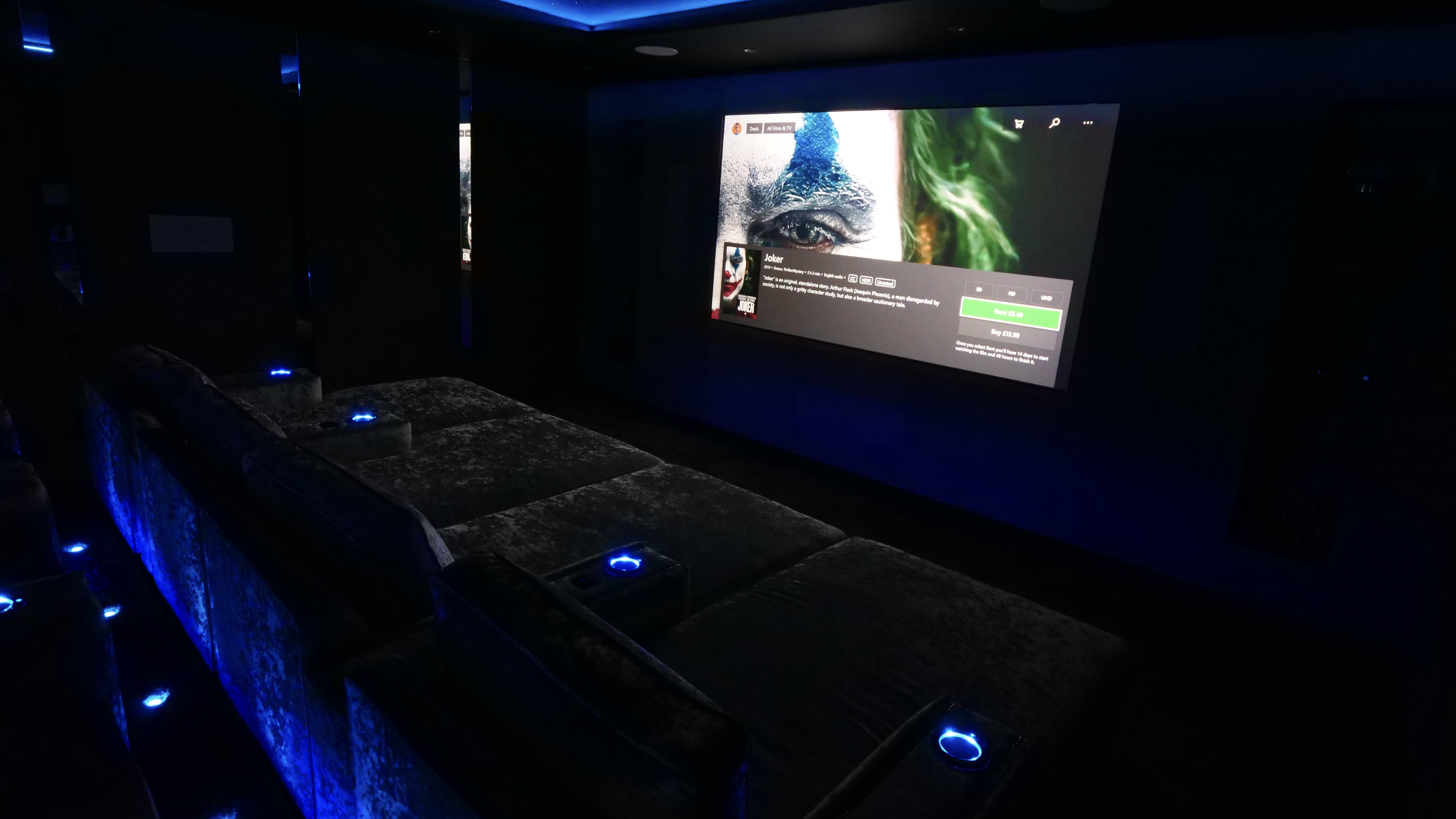
It's tempting to shop for a projector by comparing lumens and resolution numbers online, but the right choice depends almost entirely on the room it's going into. Ambient light, wall colour, seating distance and screen size all matter more than any single spec.
Lumens measure brightness. A dedicated cinema room with blackout blinds and dark walls can look stunning with a projector rated at just 1,500-2,000 lumens, because there's no competing light to wash out the image. A living room or media room used during the day needs considerably more brightness, often 3,000 lumens or higher, to hold up against sunlight and ambient lighting.
For screens over 100 inches, native 4K makes a real, visible difference in sharpness, especially when seating is closer than 1.5x the screen width. On smaller screens or rooms where seating is further back, a good 1080p projector with strong contrast can still look excellent, and frees up budget for a better screen or sound system instead.
Every projector has a throw ratio that determines how far it needs to sit from the screen to fill it at a given size. Short-throw and ultra-short-throw models are worth considering in smaller rooms where a standard projector would need to sit too far back, but they typically demand a premium ambient-light-rejecting screen to look their best.
A projector's headline brightness number gets all the attention, but contrast ratio is what actually creates a cinematic image. Deep, true blacks are what separate a flat, washed-out picture from one with real depth. This is one of the main reasons a professionally calibrated room consistently outperforms an identical projector in an untreated space.
When we spec a projector for a client, we start by assessing the room itself: wall and ceiling colour, ambient light control, throw distance, and screen size. Only then do we match hardware to those constraints, rather than starting from a specific model and working backwards. It's a small difference in approach that makes a big difference in the final picture.
Contact us today to schedule your complimentary, no-obligation design consultation and take the first step toward your ultimate home cinema.

.png)
.png)
.png)

.png)
.png)

.png)