
Buying Guides
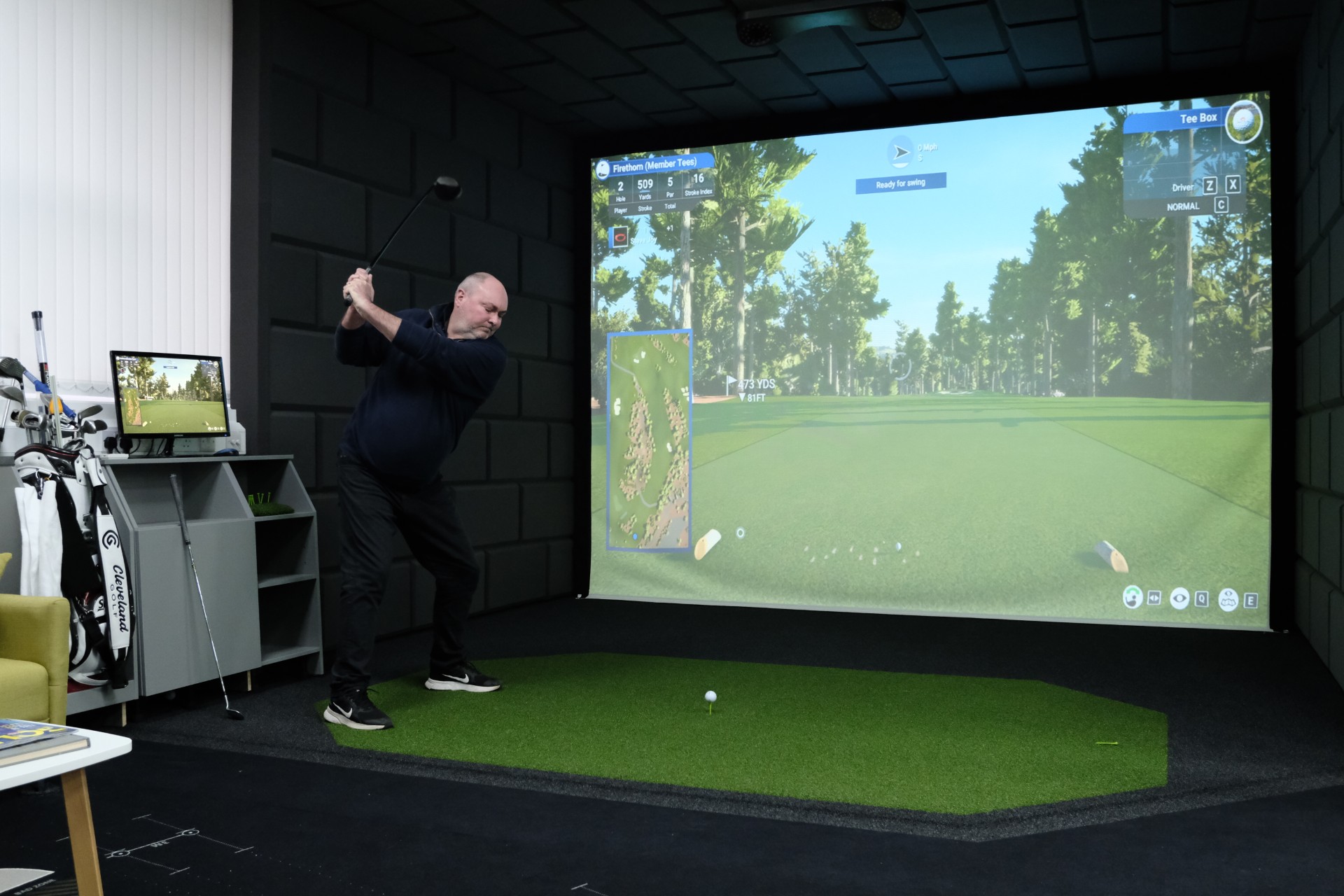
Ceiling height is usually the first thing that rules a room in or out. As a minimum, aim for 10ft (3m) of clear ceiling height to accommodate a full swing with a driver, especially for taller players. Anything lower and you're restricted to irons only, which defeats the point for most golfers.
For room length, 16-20ft is a comfortable target: roughly 8-10ft from the tee to the screen, plus a few feet behind the golfer for backswing clearance. Width-wise, 10-12ft gives enough room either side of the swing path without feeling cramped, and allows for a side-positioned launch monitor if that's the system you choose.
Simulator systems broadly split into two categories: camera-based and radar-based. Camera-based systems sit overhead or just in front of the ball and use high-speed imaging to capture club and ball data with excellent accuracy, but they're fixed in position and need consistent lighting to perform well. Radar-based systems sit behind the ball and track its flight using Doppler radar, offering more flexible placement and strong outdoor-style ball flight data, though close-range short game accuracy can vary between models.
Neither approach is universally "better" - it depends on how much of your play is full swing versus short game, whether you want outdoor course play or dedicated practice and analysis, and your budget. This is usually the single biggest cost decision in the whole build, so it's worth testing a few systems in person before committing.
The impact screen needs to be a proper simulator-rated fabric, tensioned drum-tight to avoid ball marks affecting the picture and to reduce impact noise. Behind it, a netting or padded enclosure absorbs the ball's energy safely, particularly important with modern drivers generating serious ball speed.
Projector choice follows similar logic to a home cinema setup: short-throw models are popular here since the projector typically needs to sit close to the screen without being in the golfer's swing path or getting struck by a mis-hit shot. Brightness needs to compete with any ambient light in the room, so a darker room with good light control gives a noticeably better image.
A proper golf mat with a defined hitting strip gives realistic turf interaction and protects both clubs and floor. Many setups add a swing pad or foam-backed subfloor beneath the mat to reduce joint impact over long practice sessions, and a strip of rough or fringe-style matting either side is a nice touch for shot variety if space allows.
Overhead lighting needs to avoid casting shadows across the hitting area, since camera-based systems in particular rely on consistent, even light to track the ball accurately. Dimmable or scene-based lighting works well here: bright and even for practice sessions, dimmed for a more atmospheric course-play experience on the big screen.
If more than one person will play, or both left and right-handed golfers use the room, factor in extra width for swing clearance on both sides. Wall padding or additional netting along the sides is a sensible precaution in tighter rooms, protecting both the golfer's equipment and the room itself from the occasional mis-hit.
The best home simulator rooms come from getting the space, system, and screen setup working together rather than maximising any one element in isolation. We start every golf simulator project by assessing the room itself, then match the system and screen configuration to fit it properly.
Contact us today to schedule your complimentary, no-obligation design consultation and take the first step toward your ultimate home cinema.

.png)
.png)
.png)

.png)
.png)

.png)